
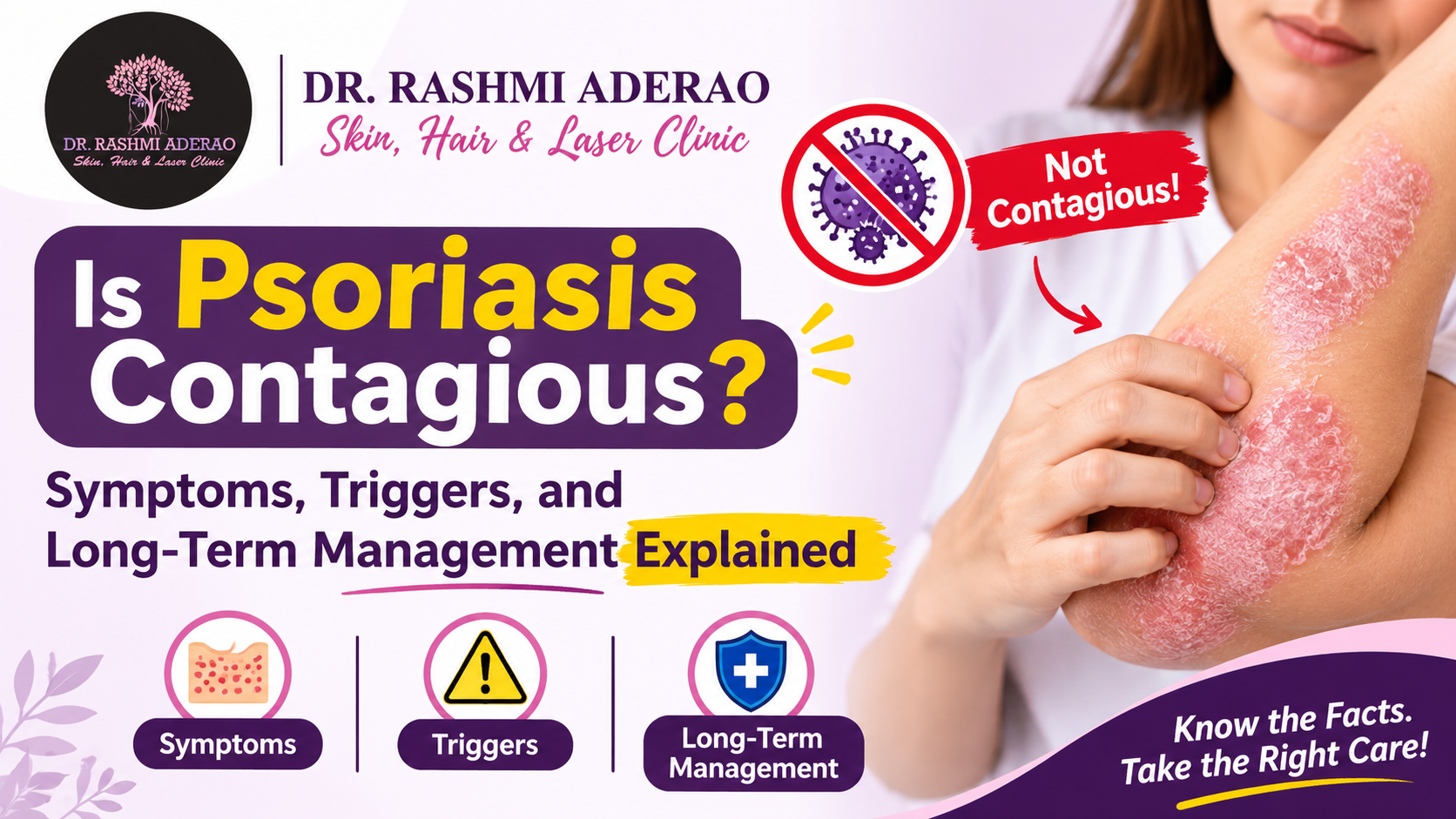
Is Psoriasis Contagious? Symptoms, Triggers and Treatment
Psoriasis can cause visible, scaly patches on the skin, which sometimes leads people to worry about catching it through physical contact. Family members, colleagues and friends may also wonder whether sharing a home or touching the affected skin is safe.
Psoriasis is not contagious. You cannot catch it by touching someone with psoriasis, sharing a meal, hugging, shaking hands or swimming in the same pool. It is a chronic inflammatory skin condition linked to immune system activity and genetic factors, rather than an infection that spreads between people.
Although psoriasis cannot be passed from one person to another, its symptoms can return repeatedly and may affect the skin, scalp, nails and joints. Understanding its triggers, recognizing the symptoms and following an appropriate treatment plan can help people manage the condition over time.
If you have persistent scaly patches or are unsure whether your symptoms are psoriasis, a dermatologist can assess your skin and recommend suitable care.
Psoriasis is a non-contagious inflammatory skin condition. It does not spread through touch or everyday contact.
Common symptoms include thick, scaly patches, itching, dryness and changes in nail appearance.
Stress, infections, skin injuries, certain medicines and weather changes can trigger flare-ups.
Treatment may include topical medicines, phototherapy or systemic medication, depending on severity.
Long-term management involves following medical advice, identifying personal triggers and seeking help for possible joint symptoms.
What Is Psoriasis and Why Is It Not Contagious?
Psoriasis is a chronic inflammatory skin condition in which the immune system causes skin cells to build up faster than usual. This produces patches of thickened, scaly skin, and the condition may improve and worsen over time. It is not caused by a contagious germ and cannot spread from person to person.
In healthy skin, cells gradually develop and move towards the surface before shedding. In psoriasis, this process accelerates, causing skin cells to accumulate and form visible plaques.
The exact cause is not fully understood, but immune system dysfunction and genetic susceptibility play important roles. Environmental factors may trigger the condition in people who are susceptible.
Can psoriasis spread through physical contact?
No. Psoriasis cannot be transmitted through ordinary physical contact or shared environments.
For example, hugging a family member with psoriasis or sitting beside a colleague with visible plaques will not give you the condition. Sharing a swimming pool with someone who has psoriasis also does not transmit it.
Psoriasis may run in families, but this reflects inherited susceptibility rather than person-to-person infection. Not everyone with a family history develops psoriasis, and people without a family history can develop it too.
What Are the Common Symptoms of Psoriasis?
Psoriasis commonly causes well-defined patches of thickened, inflamed skin with scaling, although the appearance varies according to the type of psoriasis and the person's skin tone. Symptoms may include itching, soreness, cracking, nail changes or joint discomfort, and not everyone experiences all of these signs.
Skin symptoms
Common signs include:
Raised patches with dry, thick scales.
Itching, irritation or soreness around affected areas.
Cracked skin that may bleed.
Repeated flare-ups affecting the same areas.
Temporary changes in skin colour after inflammation settles.
On lighter skin, plaques may look pink or red with silvery-white scales. On darker skin, they may appear purple, brown or darker than the surrounding skin, sometimes with less obvious redness.
Where can psoriasis appear?
Psoriasis may affect the elbows, knees, scalp, lower back, palms, soles and skin folds. It can also affect fingernails and toenails.
Nail psoriasis may cause pitting, discolouration, thickening or separation of the nail from its bed. Some people also develop psoriatic arthritis, an inflammatory condition that can cause joint pain, swelling and stiffness.
Not every scaly or itchy patch is psoriasis. Eczema, fungal infections and other skin conditions can look similar, so persistent symptoms should be assessed by a qualified clinician.
What Triggers Psoriasis Flare-Ups?
Psoriasis flare-ups occur when symptoms become more active, often after exposure to a trigger. Common triggers include psychological stress, skin injuries, infections, certain medicines, smoking, heavy alcohol use and weather changes. Triggers differ between individuals, so identifying personal patterns can help guide long-term management.
Common triggers to understand
Emotional stress may worsen symptoms in some people. A flare-up can also create stress, making it helpful to address both skin symptoms and emotional well-being.
Skin injuries: Cuts, scratches, insect bites and sunburn can trigger new psoriasis patches in affected individuals. This response is known as the Koebner phenomenon.
Infections: Certain infections, including streptococcal throat infections, can trigger a form of psoriasis called guttate psoriasis. Seek medical advice if a rash appears following an infection.
Medicines: Lithium, some antimalarial medicines and certain other drugs can trigger or worsen psoriasis in some people. Do not stop prescribed medication independently; discuss possible side effects with your clinician.
Weather: Cold, dry weather can aggravate symptoms in some people, while individual responses to sunlight vary. Sunburn can also trigger new lesions.
Lifestyle factors: Smoking and heavy alcohol use are associated with poorer psoriasis outcomes and may aggravate the condition.
How can you identify your triggers?
Keep a simple record of flare-ups, including when symptoms started, recent illnesses, changes in medicines, skin injuries and weather conditions.
For example, if symptoms repeatedly worsen during cold weather, regular moisturizing and advice on protecting the skin barrier may help. If flare-ups follow a new medicine, discuss the timing with your doctor rather than changing your prescription yourself.
How Is Psoriasis Diagnosed?
Psoriasis is usually diagnosed through a medical history and examination of the skin, scalp and nails. A dermatologist may ask about symptom duration, family history, previous treatments and possible triggers. If the appearance is unclear, a skin biopsy or other assessment may be needed to distinguish psoriasis from similar conditions.
During an assessment, the clinician may examine the distribution of plaques and look for nail changes or signs of joint involvement.
A skin biopsy is not necessary in every case. It may be considered when the diagnosis remains uncertain after examination.
Getting the diagnosis right matters because psoriasis, eczema and fungal infections can require different treatments. Using the wrong cream may delay appropriate care or aggravate symptoms.
If you have persistent patches, repeated flare-ups or unexplained nail changes, avoid relying solely on photographs or online symptom comparisons to diagnose the condition.
What Treatment Options Help Manage Psoriasis?
Psoriasis treatment aims to reduce inflammation, control scaling and itching, improve quality of life and prevent complications. The right option depends on the affected body area, severity, impact on daily life, other health conditions and previous treatment response. There is no single treatment suitable for everyone.
Common treatment approaches
Treatment option | How it may help | Important consideration |
Moisturizers and emollients | Reduce dryness and help protect the skin barrier | They support care but may not control moderate or severe psoriasis alone |
Topical medicines | Reduce inflammation and scaling in affected areas | The medicine and duration should suit the body area and severity |
Phototherapy | Uses controlled medical ultraviolet light to reduce symptoms | Requires appropriate supervision and is not the same as unprotected sun exposure |
Oral or injectable systemic medicines | Act on immune pathways involved in psoriasis | Require medical assessment and monitoring for potential side effects |
Why should treatment be individualized?
A small patch on an elbow may respond to topical treatment, while extensive psoriasis or disease affecting sensitive areas may need a different approach. Scalp and nail psoriasis can also require specific treatment plans.
For example, a person with limited plaques may be prescribed a topical medicine alongside regular moisturizing. Someone with widespread disease or significant joint symptoms may need evaluation for phototherapy or systemic treatment.
Do not start prescription steroids, oral medicines or injectable treatments without medical guidance. Some treatments require monitoring, and abruptly changing a long-term treatment plan may cause symptoms to worsen.
How Can You Manage Psoriasis Over the Long Term?
Long-term psoriasis management focuses on controlling symptoms, reducing avoidable triggers, protecting the skin and recognizing complications early. Because psoriasis often follows a pattern of flare-ups and improvement, regular follow-up and a consistent treatment routine are usually more useful than changing products whenever a new patch appears.
Practical daily habits
1. Moisturize regularly. Apply a suitable fragrance-free moisturizer to dry skin, especially after bathing, to reduce dryness and discomfort.
2. Use gentle skin care. Choose mild cleansers and avoid harsh scrubbing, which can irritate the skin.
3. Avoid picking or scratching plaques. Skin injury can trigger new lesions in some people.
4. Identify personal triggers. Record flare-ups and discuss recurring patterns with your dermatologist.
5. Support overall health. Regular physical activity, a balanced diet, adequate sleep and avoiding smoking can support general health and may benefit psoriasis management.
6. Follow your prescribed treatment. Use medicines as directed and attend follow-up appointments when recommended.
7. Monitor your joints. Persistent joint pain, swelling or morning stiffness should be reported to a clinician because psoriasis can be associated with psoriatic arthritis.
Does psoriasis have a permanent cure?
Psoriasis is a chronic condition, and there is currently no universal permanent cure. However, appropriate treatment can control symptoms, sometimes very effectively, and help people maintain their quality of life.
A period without visible plaques does not necessarily mean the condition has disappeared permanently. Continue following your clinician's advice even when symptoms improve, and discuss any changes before stopping prescribed treatment.
When Should You See a Dermatologist in Kothrud?
Consult a dermatologist if you have persistent or recurring scaly patches, symptoms that interfere with sleep or daily activities, uncertain skin changes, or psoriasis that is not responding to treatment. Prompt assessment is also important for possible joint involvement, extensive redness or symptoms that worsen rapidly.
A dermatologist can confirm the diagnosis, assess severity and discuss suitable treatment options. This is especially important when psoriasis affects the scalp, nails, face, genital area or skin folds, where treatment choices may differ.
Seek urgent medical attention if you develop widespread redness with fever, extensive skin peeling, or widespread pustules accompanied by feeling unwell. These may indicate a severe condition requiring immediate assessment.
What to expect from a dermatology consultation
Your doctor may ask when symptoms began, what makes them better or worse, which medicines you have tried and whether you have joint symptoms or a family history of psoriasis.
If you are looking for a dermatologist in Kothrud, Pune, Dr. Rashmi Aderao website lists clinical dermatology services, including care for psoriasis and other inflammatory skin conditions. A consultation can help determine whether your symptoms are consistent with psoriasis and what further assessment or treatment may be appropriate.
Frequently Asked Questions
1. Is psoriasis contagious through touch?
No, psoriasis is not contagious. You cannot catch it through hugging, shaking hands, touching affected skin or sharing a swimming pool. It is an inflammatory condition involving immune system activity, not an infection transmitted through physical contact.
2. Can psoriasis spread from one part of the body to another?
Psoriasis can develop in additional areas of the body, but this is not the same as an infection spreading. New patches may appear during a flare-up, sometimes after skin injury or irritation. A clinician can assess new or unusual lesions.
3. Is psoriasis hereditary?
Psoriasis has a genetic component, so having a close family member with the condition can increase your susceptibility. However, inheritance does not guarantee that you will develop psoriasis. Environmental factors and immune system activity also influence its development.
4. What foods should people with psoriasis avoid?
There is no single food that everyone with psoriasis must avoid. A balanced diet is generally advisable, and people with specific food sensitivities or other health conditions should seek individualized advice. Avoid restrictive diets or supplements promoted as psoriasis cures without reliable evidence.
5. Can psoriasis be managed permanently?
Psoriasis can often be controlled effectively, but it is a chronic condition and symptoms may return. Treatment can reduce flare-ups and improve comfort, although results vary. Regular follow-up and a treatment plan suited to your condition are important for long-term control.
Conclusion
Psoriasis is not contagious, and people with the condition do not need to avoid ordinary physical contact with others. Understanding symptoms, identifying triggers and following an appropriate treatment plan can help control flare-ups and reduce their impact on daily life.
If you have persistent scaly patches, recurring symptoms or possible joint problems, seek a professional assessment rather than relying on self-diagnosis. A dermatologist can help confirm the condition and recommend a suitable long-term management approach.
Begin Your Transformation
Book a consultation with Dr. Rashmi Aderao and take the first step toward healthier, more radiant skin and hair — in the heart of Kothrud, Pune.
Flexible Hours
Mon–Sat 05:30pm – 09:00pm
Kothrud, Pune
Sakhai Plaza, DP Road, Azad Nagar
Easy Booking
Call or WhatsApp us anytime