
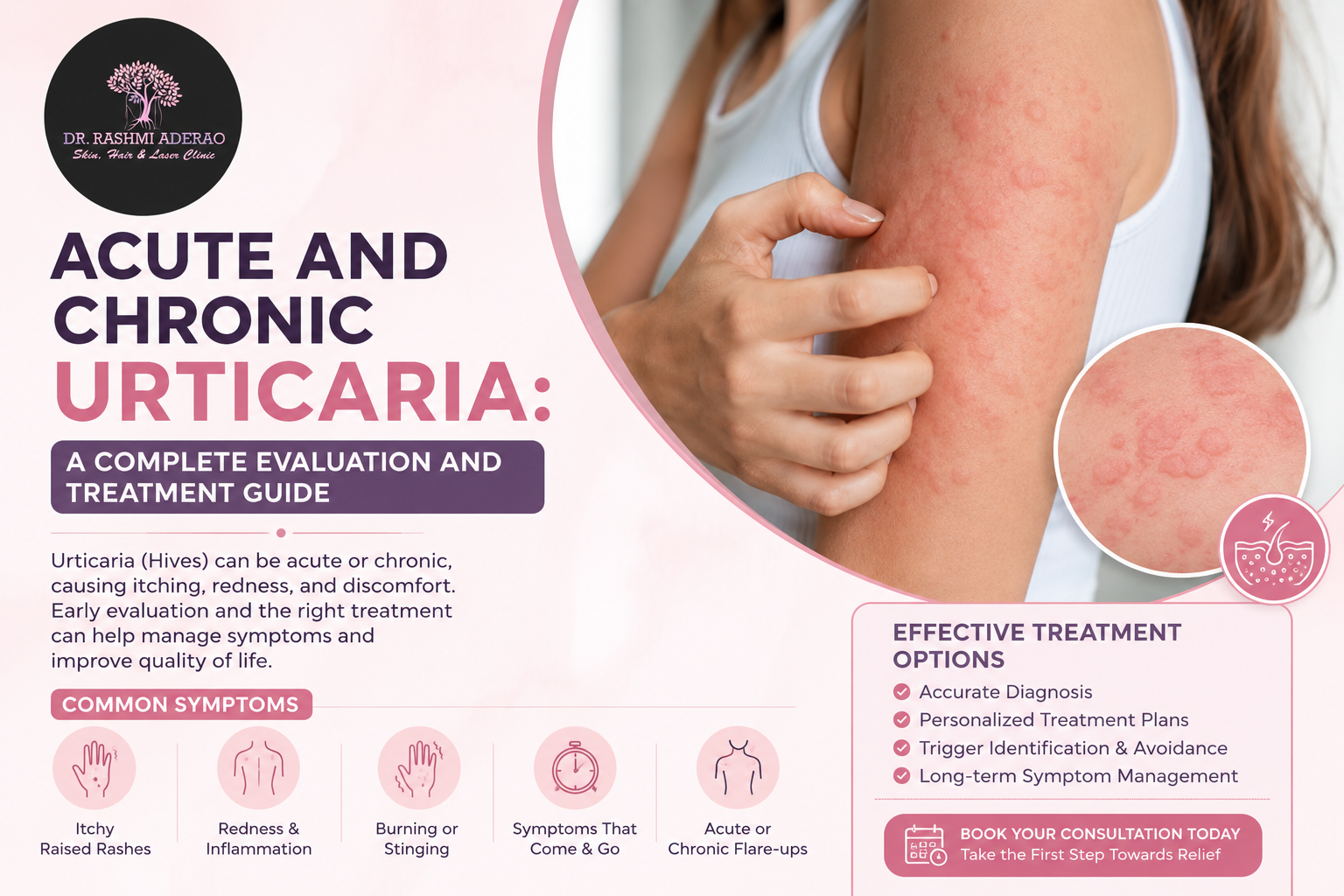
Acute and Chronic Urticaria: A Complete Evaluation and Treatment Guide
Urticaria (hives) is a skin condition that causes itchy, raised, red, or skin colored welts on the body. These sudden skin reactions can happen anywhere and vary in size and intensity. Some people have short-lived episodes, but some people may have symptoms that wax and wane for months or years.
It is important to know the difference between acute and chronic urticaria, as the approach to treatment is different depending on the duration of symptoms, triggers, and severity. With appropriate diagnosis and personalized acute and chronic urticaria treatment, symptoms can be controlled and quality of life can be improved.
Many people believe that recurring hives are temporary allergic reactions. However, chronic urticaria may require detailed evaluation to identify underlying causes and manage symptoms effectively.
This comprehensive guide discusses the causes, symptoms, diagnosis, and treatment options for acute and chronic urticaria treatment.
What Is Urticaria?
Urticaria is a skin condition that results from the release of chemicals, including histamine, from immune cells in the skin. This reaction causes swelling, itching and redness.
Shared features include:
Raised, itchy lumps
Red or pink zones
Swelling of the affected areas
Stinging or burning
Symptoms that appear and disappear suddenly
The severity and the duration determine if a person has acute urticaria or chronic urticaria.
Types of Urticaria
Acute Urticaria (hives)
Acute urticaria refers to hives that last for less than six weeks. It’s a common but temporary condition that can be caused by an allergic reaction, infection, medication, or environmental trigger.
Typical triggers include the following:
Some foods
Insect stings
Medicine.
Infections (viral)
Irritation of the skin
Temperature change
In most cases, with appropriate treatment of acute and chronic urticaria and trigger management, acute urticaria will improve.
Chronic Urticaria
Chronic urticaria is defined as hives that last or reappear for more than six weeks.
Chronic urticaria, unlike acute urticaria, generally has no single obvious trigger. It could be because of the immune system responses or other underlying factors.
Signs and symptoms may include:
Hives often . . .
Itching that won’t quit
Recurrent oedema
Sleep problems
A bit less comfort a day
Effective Acute and Chronic Urticaria Treatment For chronic cases, treatment aims to control symptoms and improve long-term skin health.
Causes of Acute Urticaria
Acute urticaria can be triggered by several factors.
Allergic Responses
Some foods can cause hives. These include:
Nuts
Milk products, eggs, seafood
Medicines
Allergic skin reactions can be caused by some medicines.
Contagious Diseases
Hives can also be caused by viral or bacterial infections that stimulate the immune system.
Environmental Influences
Triggers might include the following:
Heat, Freezing, Compression, Light
Knowing the cause helps doctors suggest the right acute and chronic urticaria treatment.
Reasons for Chronic Hives
Often, the exact cause of chronic urticaria is unknown. In many cases the immune system goes into overdrive and causes repeated histamine release.
Potential factors include:
Immune system problems
Stress Relief
Hormonal changes
Long-term infections
Thyroid problems
Some drugs
Choosing the right Acute and Chronic Urticaria Treatment requires a full medical assessment.
Urticaria Symptoms
Symptoms can be different for each person
Typical symptoms could be:
Itchy skin
Hives usually appear as areas of swelling that may move around.
Severe Itching
One of the most common complaints is itching.
Swelling (Angiodema)
Some people develop swelling around:
Lips, eyes, face, hands, feet, burning feeling
Some patients have itching, as well as discomfort.
Proper management of acute and chronic urticaria can help alleviate these symptoms and avoid frequent recurrences.
Diagnosis of Urticaria
This is usually assessed by a dermatologist or an allergy specialist:
Past medical history
Duration of symptoms
Possible causes
Skin inspection
In chronic cases, the doctor may order additional tests, such as:
Laboratory tests
Allergy tests
Thyroid evaluation
Autoimmune Testing
A correct diagnosis helps in developing an effective acute and chronic urticaria treatment plan.
Treatment of acute and chronic urticaria.
Treatment is determined by whether the condition is acute or chronic.
1. Anti-histamines
Antihistamines are often used to relieve itching and symptoms caused by histamine.
They assist:
Hives lowered
Control the Itch
There are no other responses
Dosage may be adjusted according to severity of symptoms.
2. Avoiding Triggers
An important part of the treatment of acute and chronic urticaria is the identification and avoidance of triggers.
Some helpful steps include:
All known allergens
Lessen skin irritation
Control stress
Keep a symptom diary
3. Corticosteroids
During severe flare-ups, doctors may prescribe corticosteroids for a short period of time.
They help to reduce inflammation but should only be taken under medical supervision.
4. Higher Level of Treatment Options
In cases where standard treatment for chronic urticaria doesn’t work, specialists may suggest advanced therapies.
These can include:
Biologic medicines
Immune-targeted therapies
Guided therapies by specialist
They are considered if the standard treatment for acute and chronic urticaria is not sufficient.
Lifestyle Tips to Help Manage Urticaria
Changes in lifestyle as well as medical treatment can also help you get better control.
Avoid Using Hot Water
Hot showers can make itching and irritation worse.
Wear comfortable clothes
Loose cotton clothing may reduce skin irritation.
Stress Management
Some people find that stress can cause or exacerbate symptoms.
Keep Skin Moist
Gentle moisturizers can help support the skin barrier.
These habits are adjuncts to acute and chronic urticaria treatment.
When to See a Doctor?
If you need to see a doctor:
The hives last for several weeks.
Symptoms recur and recur
Itching disturbs sleep
Swelling is normal
Symptoms get worse with time
A dermatologist can diagnose your condition and prescribe the right acute and chronic urticaria treatment.
Urticaria flare-ups may be preventable
Not all cases can be prevented, but these steps may help:
Know your own personal triggers
Follow prescription instructions
Avoid unnecessary allergens.
Routines for healthy skin care
Watch for symptoms
Consistency is key in successful treatment of acute and chronic urticaria.
Urticaria flare-ups may be prevented
You can’t prevent all cases, but these steps may help:
Understand your own triggers
Follow the prescription label instructions
Avoid unnecessary allergens.
Skin Care Regimens for Healthy Skin
Look for symptoms
Consistency is key to successful treatment of acute and chronic urticaria.
Conclusion
Urticaria can be a temporary allergic reaction or a long-term disease that affects a person's daily life. The first step to good management is to determine if you have acute or chronic urticaria.
Proper assessment, identification of triggers, lifestyle changes and medical advice can help manage symptoms successfully. Current treatments for acute and chronic urticaria can help patients manage itching, reduce the frequency of flare-ups and increase comfort overall.
If hives keep recurring or are affecting your quality of life, it's important to visit a qualified dermatologist for proper diagnosis and customized treatment.
Begin Your Transformation
Book a consultation with Dr. Rashmi Aderao and take the first step toward healthier, more radiant skin and hair — in the heart of Kothrud, Pune.
Flexible Hours
Mon–Sat 05:30pm – 09:00pm
Kothrud, Pune
Sakhai Plaza, DP Road, Azad Nagar
Easy Booking
Call or WhatsApp us anytime